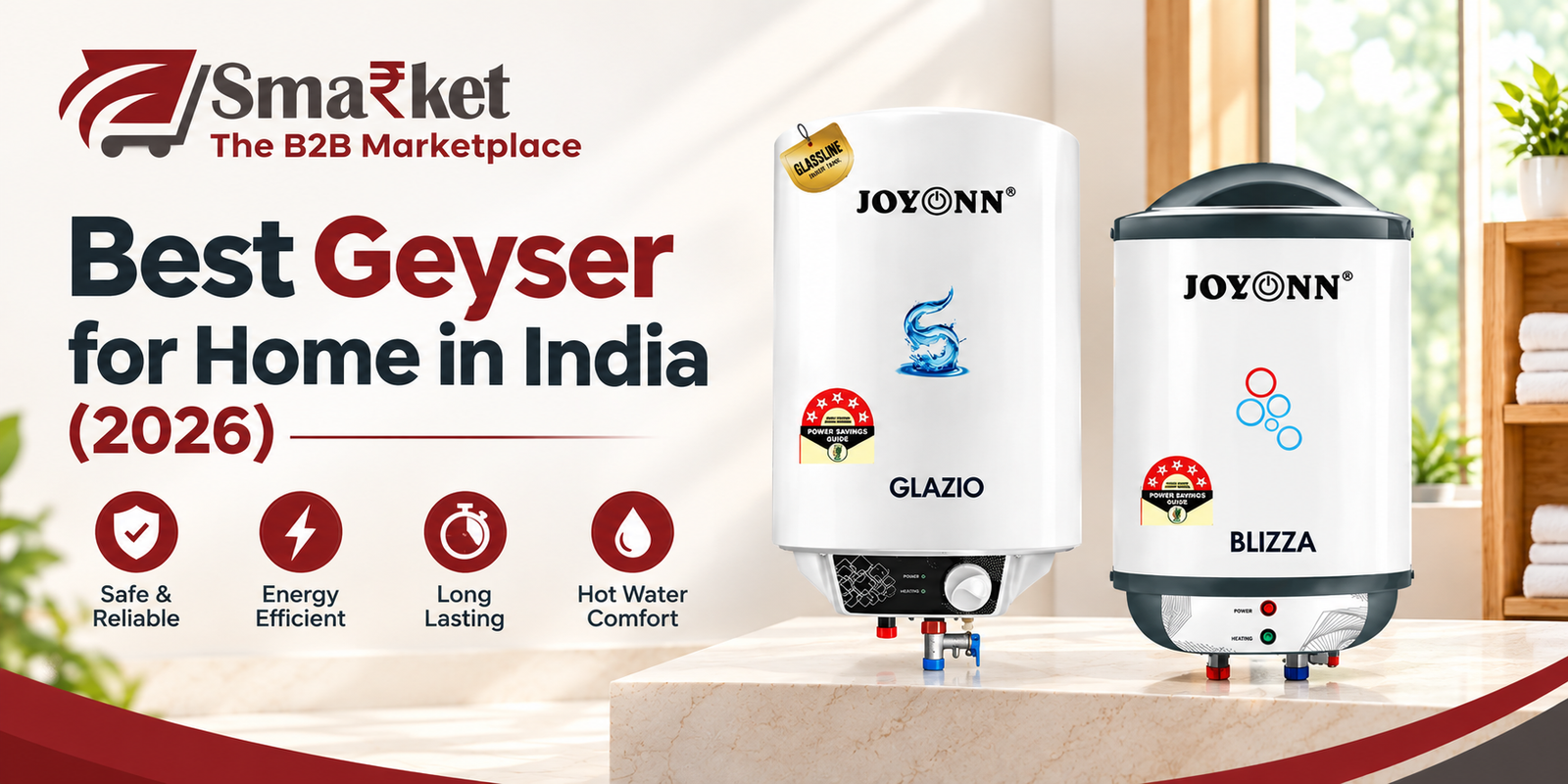
Best Geyser for Home in India (2026): Copper vs Glassline, Gas vs Electric Compared
Most geyser guides pick one fight and stop there — either copper vs. steel tanks, or gas vs. electric, rarely both, and almost never with a straight answer for hotels or bulk buyers alongside homeowners. That’s the real gap this guide closes. Finding the best geyser for home use in India means weighing tank material against your water quality, and fuel type against your household size, not just picking whatever has the highest star rating on Amazon.
What Finding the Best Geyser for Home Really Comes Down To
There’s no single best geyser for home that works everywhere — a Delhi household with hard water needs a different tank than a Bangalore apartment with soft municipal supply, and a hotel running twenty rooms needs different capacity math than a family of four. This guide walks through both major decisions — tank material and fuel type — with honest use-cases for homes, hotels, and bulk/B2B buyers.
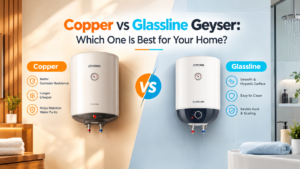
Copper vs Glassline Geyser Which One Is Best for Your Home?
This is the comparison most buying guides get wrong by oversimplifying. Here’s the honest breakdown:
Copper tank geysers heat water faster than most alternatives and resist scale build-up better, which sounds like an easy win. But copper tanks are genuinely rare in Indian storage geysers — most “copper” mentions on the market actually refer to a copper heating element inside a steel or glass-lined tank, not a full copper tank. True copper tanks cost significantly more and can corrode in salty or coastal water conditions, so they’re a niche premium choice rather than a mainstream one.
Glassline (glass-lined) tank geysers are the real mainstream answer for most of India. A glass-enamel coating lines the inner steel tank, protecting it from corrosion — especially valuable in hard-water regions like Delhi, Rajasthan, and Gujarat. Paired with a sacrificial anode rod (which needs periodic replacement), a good glassline tank comfortably lasts 8-12 years.
For homes: if you’re in a hard-water area, glassline is the practical best geyser for home choice — it balances cost and corrosion resistance far better than chasing a true copper tank.
For hotels and bulk/B2B buyers: glassline dominates commercial installations too, simply because replacing twenty copper-tank units costs dramatically more than twenty glassline units with the same warranty coverage — and hotels need predictable maintenance costs across many rooms, not a premium tank in a handful of them.
Gas and Electric Which Geyser Is Best for Indian Homes?
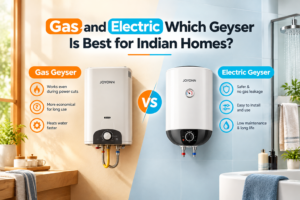
The gas and electric which geyser is best question has a clearer answer than the tank-material debate, mostly because of safety.
Gas geysers heat water roughly three times faster than electric models and keep working during power cuts, which matters in areas with unreliable electricity. But they need proper ventilation, a stable LPG or PNG connection, and carry a real risk of carbon monoxide buildup or gas leaks if installed poorly — which is exactly why very few Indian brands still manufacture them for indoor residential use.
Electric geysers are safer for indoor, enclosed Indian bathrooms, install with just a wall mount and wiring, and now include auto cut-off and thermostatic control as standard even on budget models. They cost a bit more upfront and heat slightly slower than gas, but need far less ongoing maintenance.
Which Is Best for Families?
For most Indian households, electric storage geysers are the safer, lower-maintenance best geyser for home pick — especially in apartments where ventilation for a gas unit isn’t practical.
Which Is Best for Hotels and Bulk Buyers?
Hotels and commercial buyers overwhelmingly standardize on electric storage geysers for the same reason families do — safety compliance and predictable maintenance across dozens of units matter more than the marginal speed advantage gas offers. Gas geysers are rarely seen in modern Indian hotel plumbing specs for this exact reason.
Pricing, Delivery, and What Most Best Geyser for Home Guides Skip
A 15L electric storage geyser in India typically ranges from ₹5,000 to ₹10,000 depending on tank material and BEE star rating, while true copper-tank units and premium glassline models can run higher. Gas geysers are often marginally cheaper upfront (₹4,000-5,000) but carry higher installation complexity costs that rarely show up in the sticker price.
Delivery on Amazon and Flipkart for these categories typically runs 2-5 days in metro cities. What most comparison articles skip entirely: after-sales service quality varies far more by brand’s actual service-centre footprint than by price — a cheaper unit backed by a strong local service network often outlasts a pricier one with thin regional support.
Is Smarketonline a Bulk Supplier for the Best Geyser for Home and Business?
Yes. Through Joyonn and its B2B wholesale arm, SmarketOnline, both individual homeowners and dealers/hotels/institutional buyers can source geysers with consistent stock and dealer pricing tiers. For bulk or hotel orders, warranty and service terms are agreed upfront in the purchase contract rather than routed through a single-unit consumer warranty card — which matters far more when you’re maintaining twenty units across multiple floors than it does for one home installation.
Frequently Asked Questions
What is the best geyser for home use in hard water areas?
A glassline (glass-lined) tank geyser with a sacrificial anode rod is the practical best geyser for home use in hard-water regions like Delhi, Gujarat, and Rajasthan.
Copper vs glassline geyser which one is best for a coastal home?
Neither metal is fully immune to salty air — a glassline tank with a strong anode rod and regular flushing performs more reliably than a true copper tank in coastal conditions.
Gas and electric which geyser is best for an apartment?
Electric, almost always — gas geysers need ventilation and outdoor cylinder space that most apartments simply don’t have.
Is Smarketonline suitable for hotel or bulk geyser orders?
Yes, through Joyonn’s B2B arm SmarketOnline, bulk and institutional buyers get dealer pricing and direct warranty support for multi-unit orders.
Which is the best 5-star geyser in India?
5-star BEE-rated glassline models from brands like AO Smith, Havells, Racold, Joyonn are consistently rated among the best geyser for home options for energy efficiency, since they retain heat longer and cut standby power loss.
Which geyser is more safe?
Electric geysers are significantly safer than gas geysers for Indian homes — no combustion risk, no ventilation requirement, and standard auto cut-off protection even on budget models.
Which geyser is best for saving electricity?
A 5-star BEE-rated electric storage geyser with good tank insulation saves the most on running costs, since it needs less energy to maintain water temperature between uses.
Which geyser is good, gas or electric?
For nearly all Indian homes and hotels, electric is the practical answer — gas heats faster but needs ventilation and carries safety risks that electric models simply don’t have.
What is the best geyser to buy?
The best geyser to buy depends on your water hardness and household size: a glassline tank with a 5-star rating covers most needs, while bulk or hotel buyers should prioritize warranty terms and service network over brand name alone.
Final Word
There’s no universal best geyser for home — the right pick depends on your water hardness, household size, and whether you’re buying one unit or fifty. If you can share your city, water type, and whether this is for a home, hotel, or bulk order, we can point you toward the exact tank material and fuel type that fits your situation best — feel free to tell us in the comments or reach out directly.